Featuring: Pat Old
Since we have a little waiting to do before we can go and enjoy Majacraft Camp 2016, we thought it might be of interest to feature our tutors, so all those now signed up can get a little taste of what is to come at […]
All you need to spin your dreams
Since we have a little waiting to do before we can go and enjoy Majacraft Camp 2016, we thought it might be of interest to feature our tutors, so all those now signed up can get a little taste of what is to come at […]
This week we were able to send out a gorgeous batch of customised wheels, just check these out, we love them! One of the joys of being a small company hand crafting our products, is that it gives us a lot of freedom to really […]
Majacraft now has in stock both the 72tpi and the 128tpi carding cloth for the amazing new Fusion Engine Drum carder. This raises a few questions! The first, and most important one is, ‘which cloth doth suit me best?’ So we thought it might be useful to create a guide to help you with that decision. What follows is really a full tutorial about carding, with extra info and tips for getting the results you want from the cloth you choose. For a quick guide, scroll down to the two flowcharts to check which carding cloth works best with the fibres you plan to card!
A while ago I made a review of the carder, and also a video to show some of the amazing things that are possible with it, and highlight some of the unique ways this carder is different from others currently on the market.
That video was made entirely on the 72TPI carder, and in it I showed how I made both a smooth blended batt and a textured art batt. When I have time I will make a similar one with the 128TPI cloth! In the meantime however, I wanted to share some information that might make it easier to decide which carding cloth you want to start out with. Of course the upside is that the drums are interchangeable so you can also be confident that you are not going to be stuck with the ‘wrong’ carding cloth if your carding needs change in a year or two..
So here’s the thing, the important thing. Your carding cloth just needs to be matched up with the kind of fibre you are ‘mostly’ going to be carding. You can make a smooth batt or a textured batt on pretty much any carder, so long as you have a cloth that is appropriate to the fibre you are using. Generally speaking this means that if you have coarse fibre you need a coarse cloth, for example most of your carding is going to be Lincoln, or Leicester, then you would want to consider a coarse cloth in the 45-52TPI range. If the majority of your fibre is fine, such as Merino, Alpaca, or Cormo, then you need to look for a carding cloth in the ‘fine’ range, 92TPI and over. Majacraft is providing a very versatile 72TPI cloth that works great on most fibres, and for those wishing to focus on the finer fibres as the majority of their carding, the 128TPI cloth is wonderful!
This is how it works, ‘TPI’ stands for ‘Tines Per Inch’ and refers to the density of tines on the carding cloth. When you have a low TPI count, it means there is plenty of room between the tines to accommodate thicker fibres. A high TPI count gives you closer packed tines that are more efficient for carding fine fibres. If you were to ever try carding a fine fibre on a coarse carder you would quickly see that nepps begin to form as the fibres are at greater risk of breakage due to the coarser tines. If you try to card a very coarse fibre on a fine cloth you will have difficulty cranking the handle as the finer tines try to hang on to the larger fibres but are unable to penetrate them to open them up. And this is what a carder does, what it is made for, taking your washed locks and opening them up and smoothing them out, giving you an even blend of draft-able fibres ready to spin.
One way to match up your cloth with your fibre is by paying attention to the micron counts (approximate) of your fleece. For our purposes, lets consider that anything between 18-24 micron is ‘fine’, that 24-32 Micron fibers are ‘medium’ and 33+ micron fibers are ‘coarse’.
Now its time to consider your requirements!
You may want to ‘mostly’ make smooth and well blended batts, and you may want to do this with your ready supply of medium micron Corriedale. In this case the Fusion Engine carder with a 72tpi cloth is going to be great! It will work wonderfully with medium fibres (such as Corriedale, BFL, Suffolk, Perendale etc), it will also handle the medium to coarse fibres well, so long as you are a little careful about their preparation before feeding them into the carder by making sure they are pre-opened. You do that by flicking the ends open with your flick carder (that comes with your drum carder) and hand-picking them to pull thick locks apart. So long as you are feeding in small amounts at a time you should be happy with the result you get using the 72TPI cloth with most coarser fibres, and for your medium micron fibres the 72TPI will do a fantastic job of making beautiful blended batts.
You can also make textured art batts on this same 72 TPI carder. I will come back to this soon with some tips and tricks to keep the texture in your fibre despite putting it through a drum carder!
If you work mostly with fine fibres, you would definitely be wanting to look at the finer cloth, and the 128 TPI cloth that Majacraft supplies for the Fusion Engine is excellent for making thoroughly blended smooth batts with fine fibres such as Merino, Cormo, fine Alpaca, Shetland, Polwarth etc. You can be confident that your fibres will not be damaged when they are well prepared and gently carded on the Fusion Engine with the 128 cloth.
Here are a couple of charts that you might find useful when making your carding cloth choices! You can view them here or click the links to view them full size. The first is about making smooth blended batts on your drum carder with both kinds of cloth, and the second about Textured art batts. Click the image for a closer look and feel free to download and print if you would like to keep these as a reference. For troubleshooting please scroll to the end of the page!
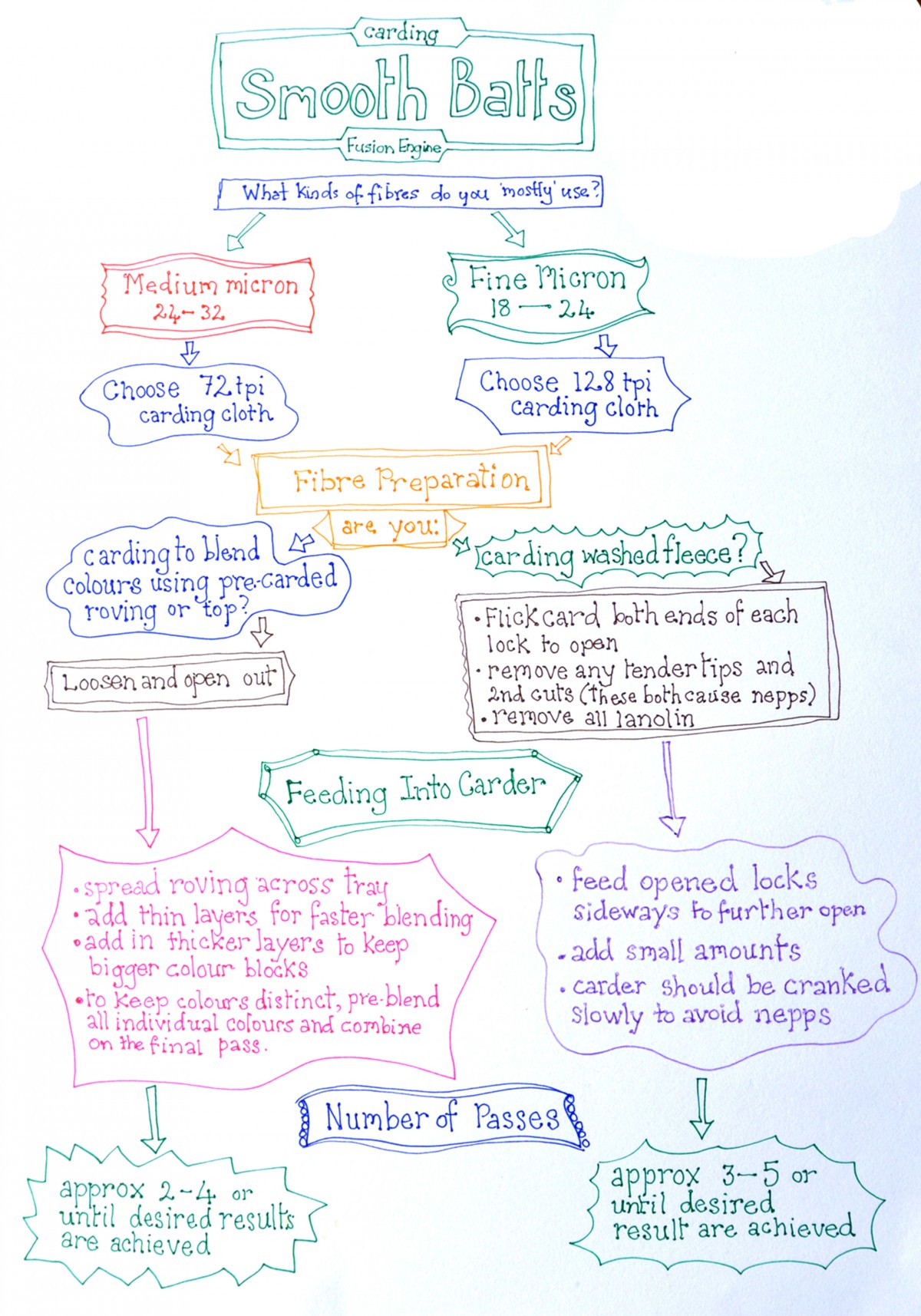
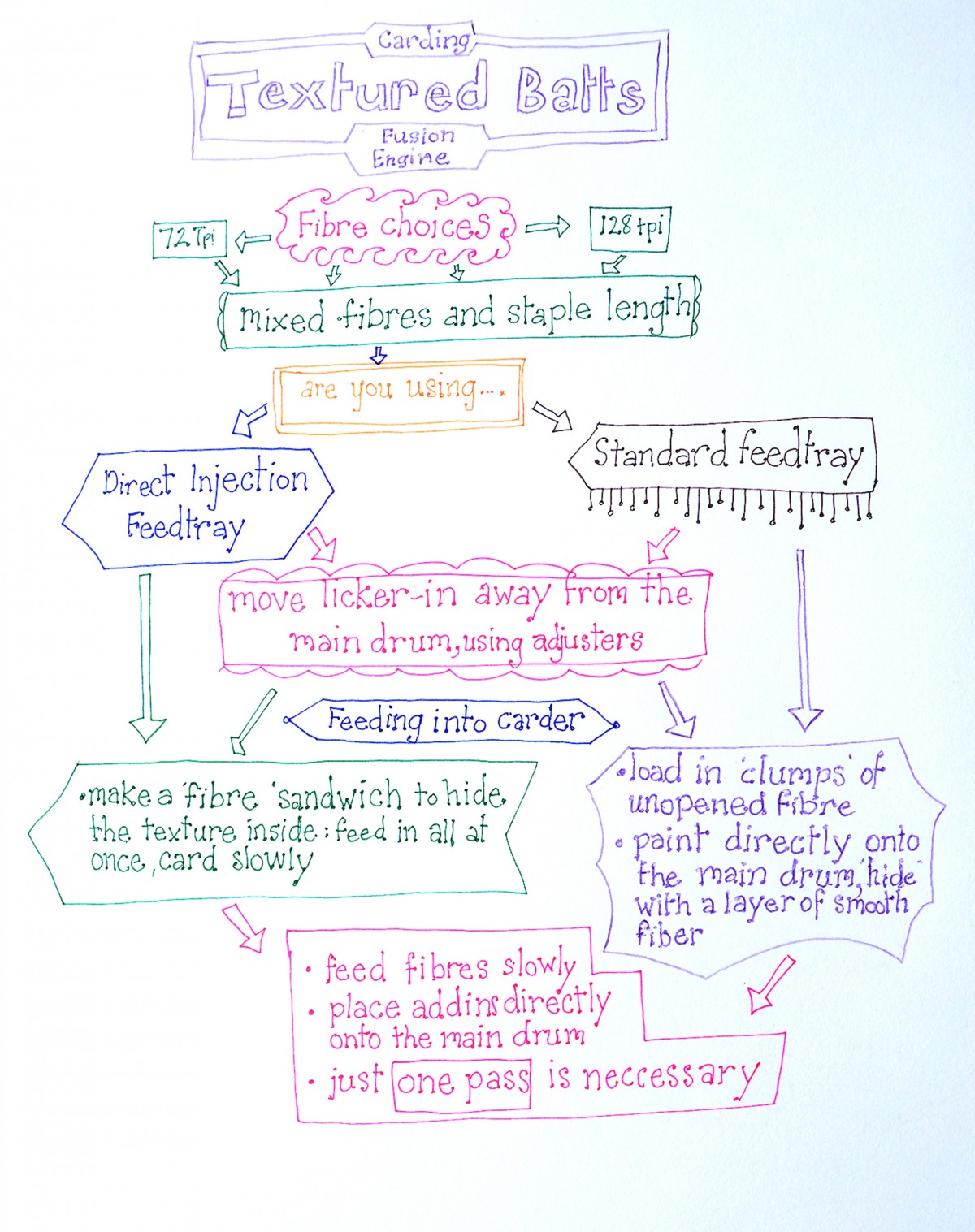
In these charts you can see (hopefully) the steps for carding both a smooth and a textured batt, using either cloth. Just keep in mind that the 128tpi cloth is not the one you want to choose if you are planning on making mostly textured art batts, even if you have a lot of fine fibre to put in them. The job of the carder is primarily to open out and smooth the fibres you feed in, and the 128TPI does that very efficiently! There are ways to ‘trick’ the carder to leave some texture in, but if you are wanting to make more textured than smooth batts I would strongly suggest you choose the 72TPI cloth as it is more versatile in handling a range of fibres, you then only need to alter the ways you need to prepare and feed in fibre to get different kinds of batts from it. (As shown in the video above).
The 128TPI is really most suited to making well blended batts with fine fibres, which it does very efficiently, it is also fantastic for colour blending as the number of passes you need to make to get a good blend is less than on any lower ratio carders. If you want to keep colour variation as a feature of your batt you simply pre-card your individual colours and then put them together into your final batt for one pass, and you will get some distinct colours.
What follows is a photo series to give you some idea of the efficiency of this machine with the 128TPI cloth, and mixed fine fibres including some previously uncarded locks, images taken during a colour blending session.
I started with a mix of kid mohair, silk, Polwarth hogget (young sheep) and some Angelina:
I fed on fairly thin layers, alternating the fibre type, to enhance the blending:
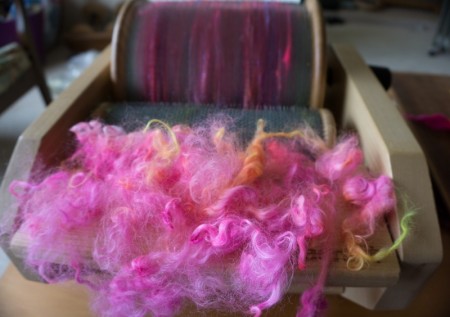
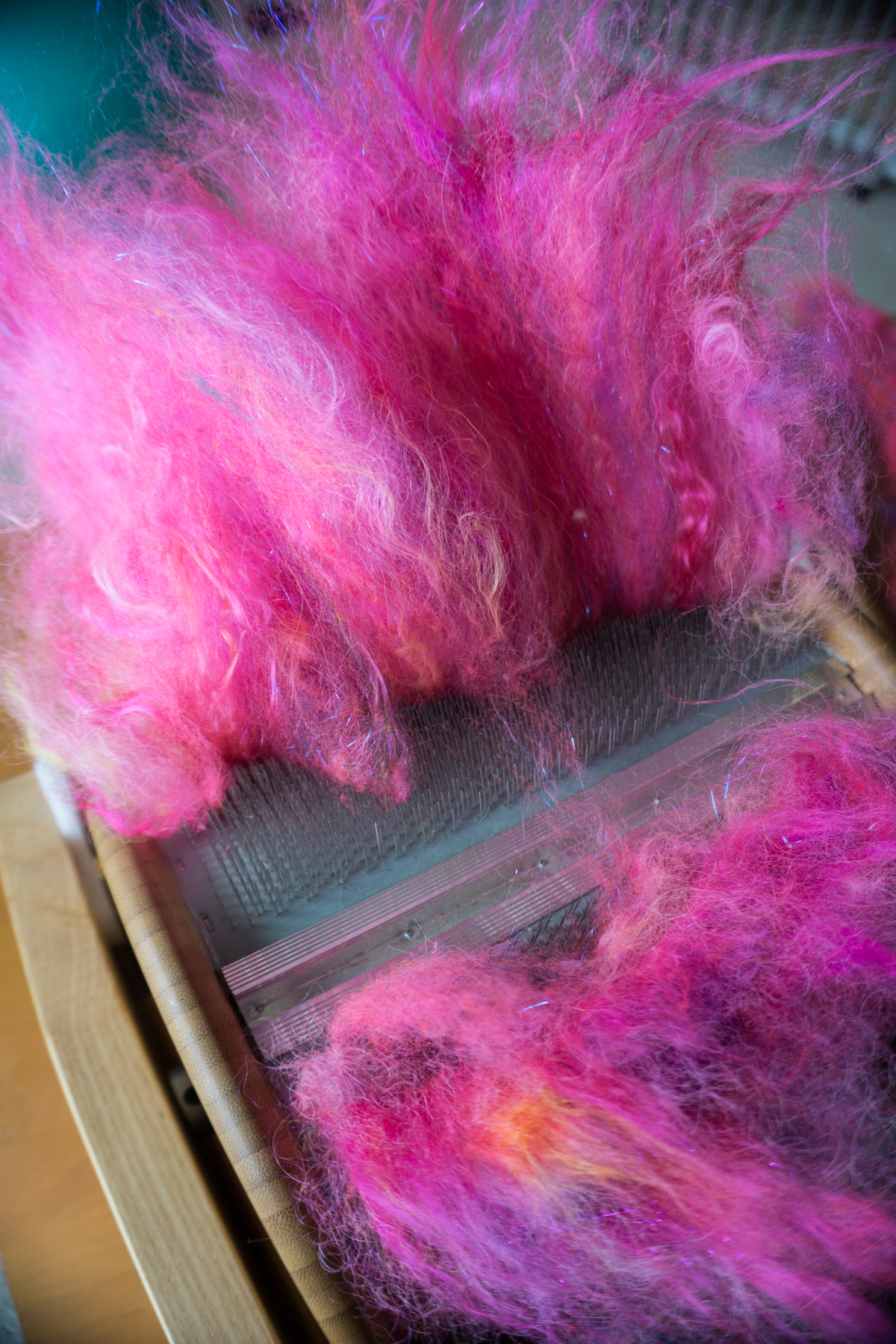
This is the result of the first pass, you can still see the individual fibres and colours, but it is all blended into an easy to draft from batt. You can still see defined curl and crimp texture too. If you spun this now it would give you a wonderful, gently textured yarn.
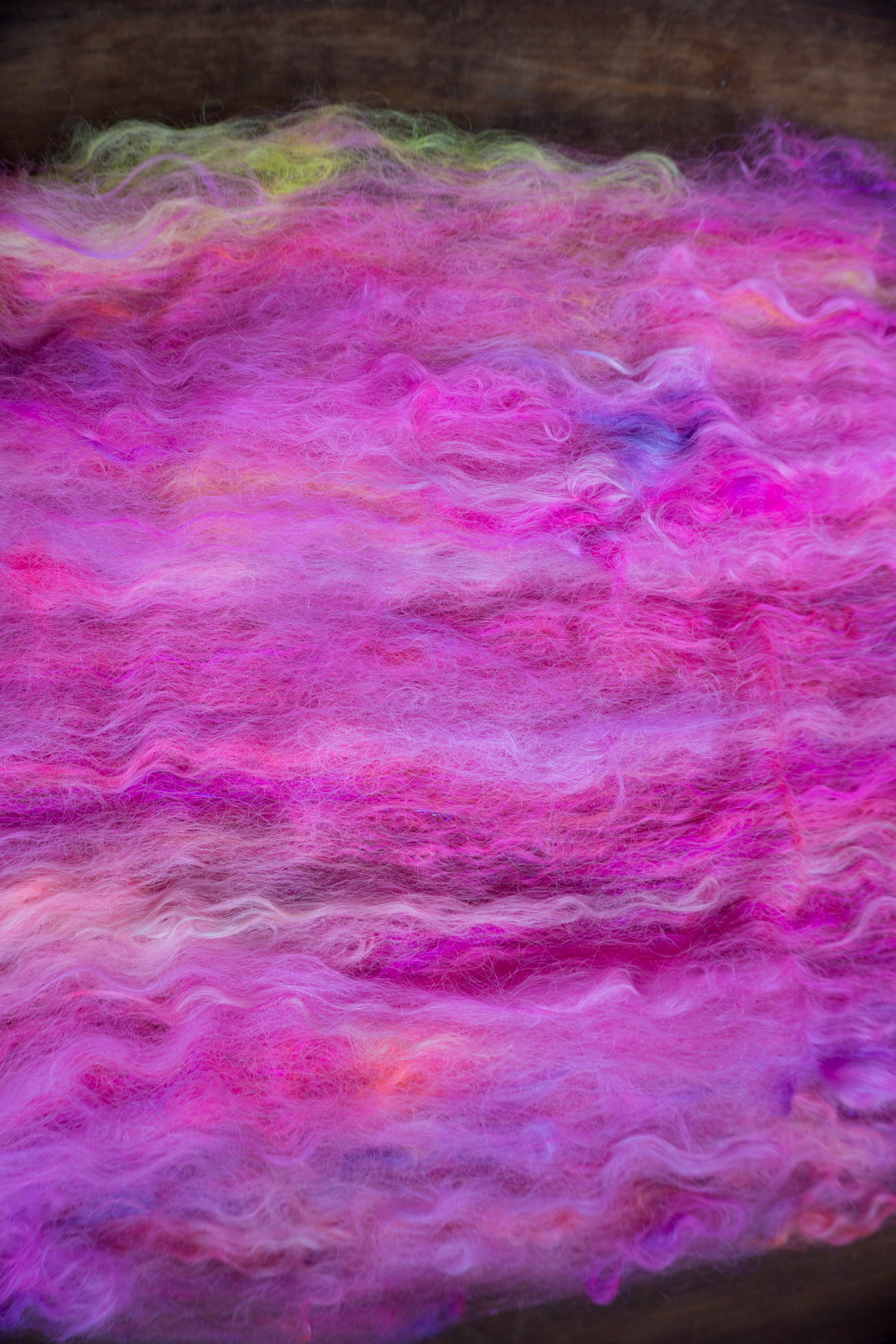
The second pass yielded this result, smoother and with more blending visible. This would give you a smoother yarn with some distinct colour variations:
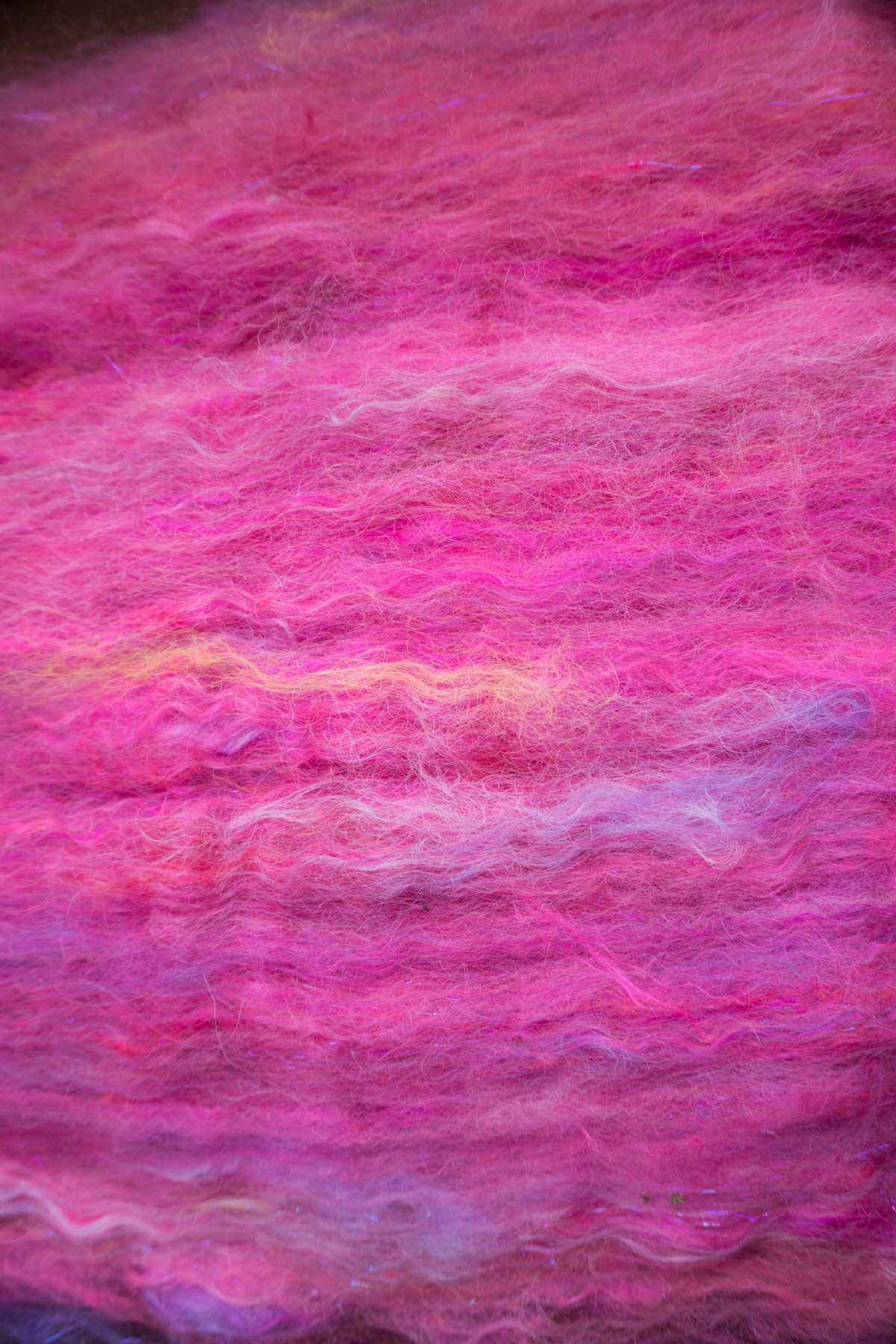
The third pass gave me this, and you can now see the colour getting more blended, the yarn from this will be a mostly evenly coloured with still some interesting colour variations:
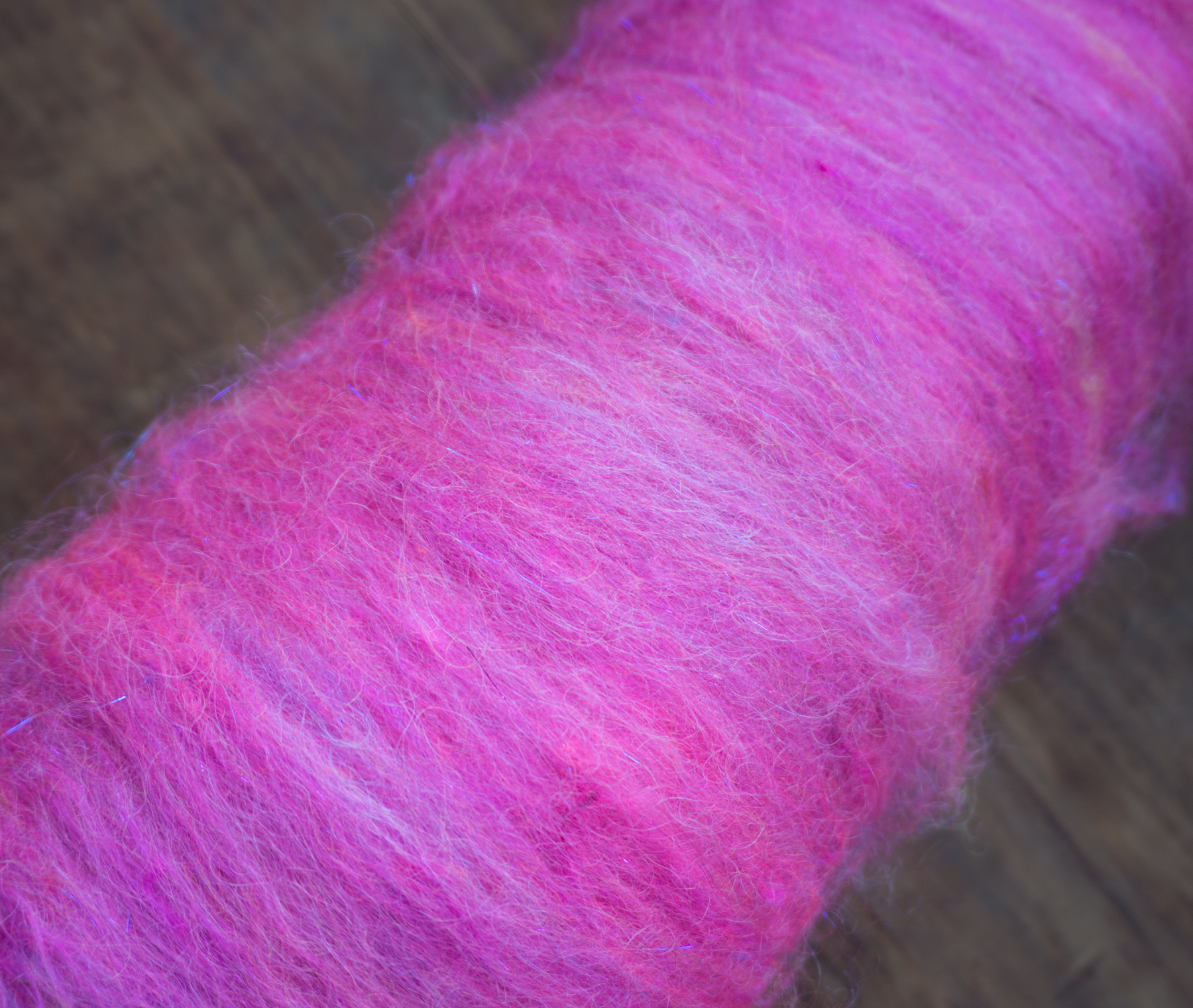
And the fourth pass produces this wonderfully smoothly fluffy (remember the Mohair?!) pink batt: This will create a fairly evenly pink yarn and I plan to spin it quite fine.
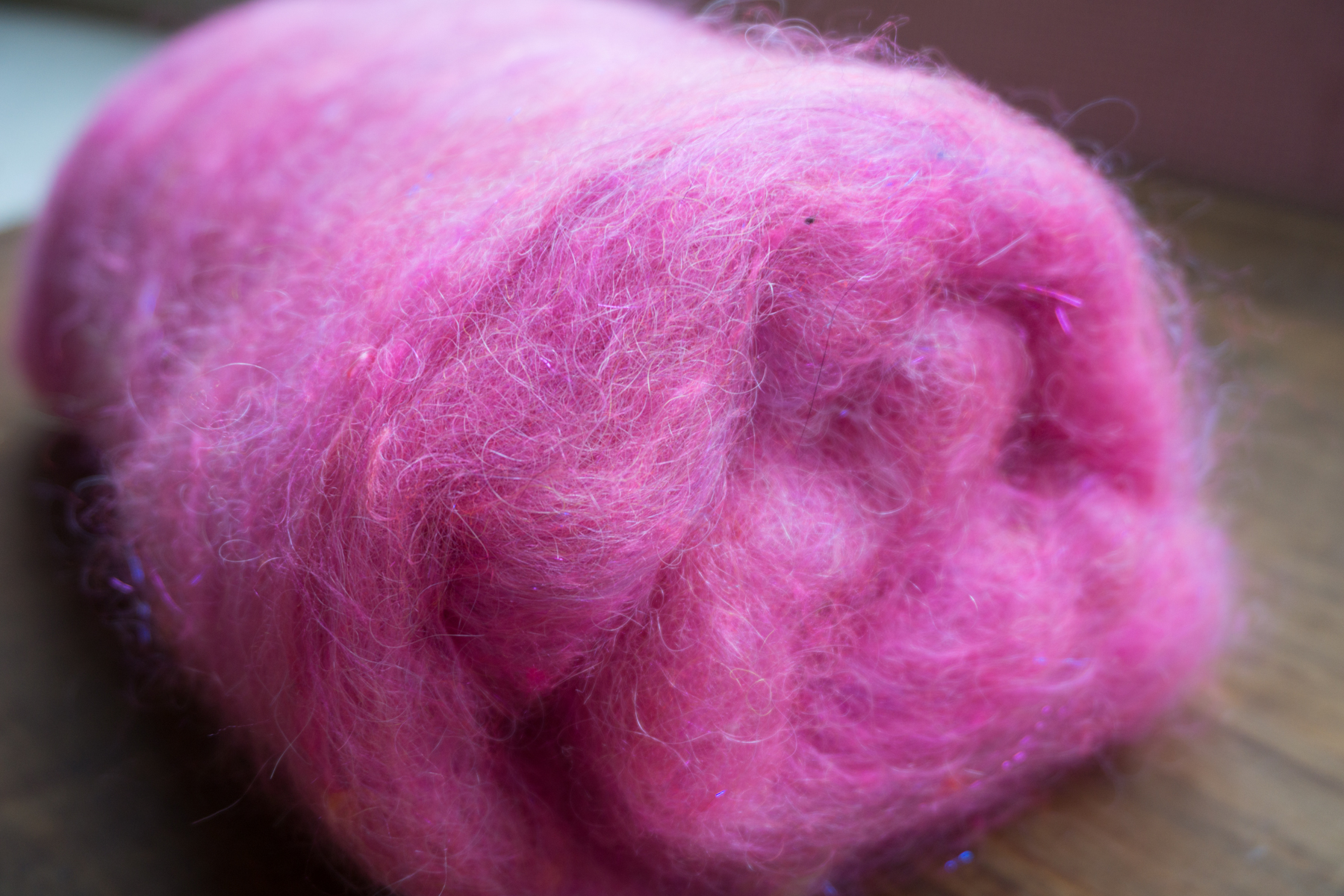
So with this 128TPI cloth I created the batt I wanted from my mix of fine fibres, it is light, fluffy, has some sheen from the silk and mohair along with some bounce from the Polwarth. Four passes was all I needed for this!
Now to try the pre-carded roving and commercial top for a colour only blend! Here are my results:
One pass in which I layers the three colours (brown, grey, and white) in thin layers:
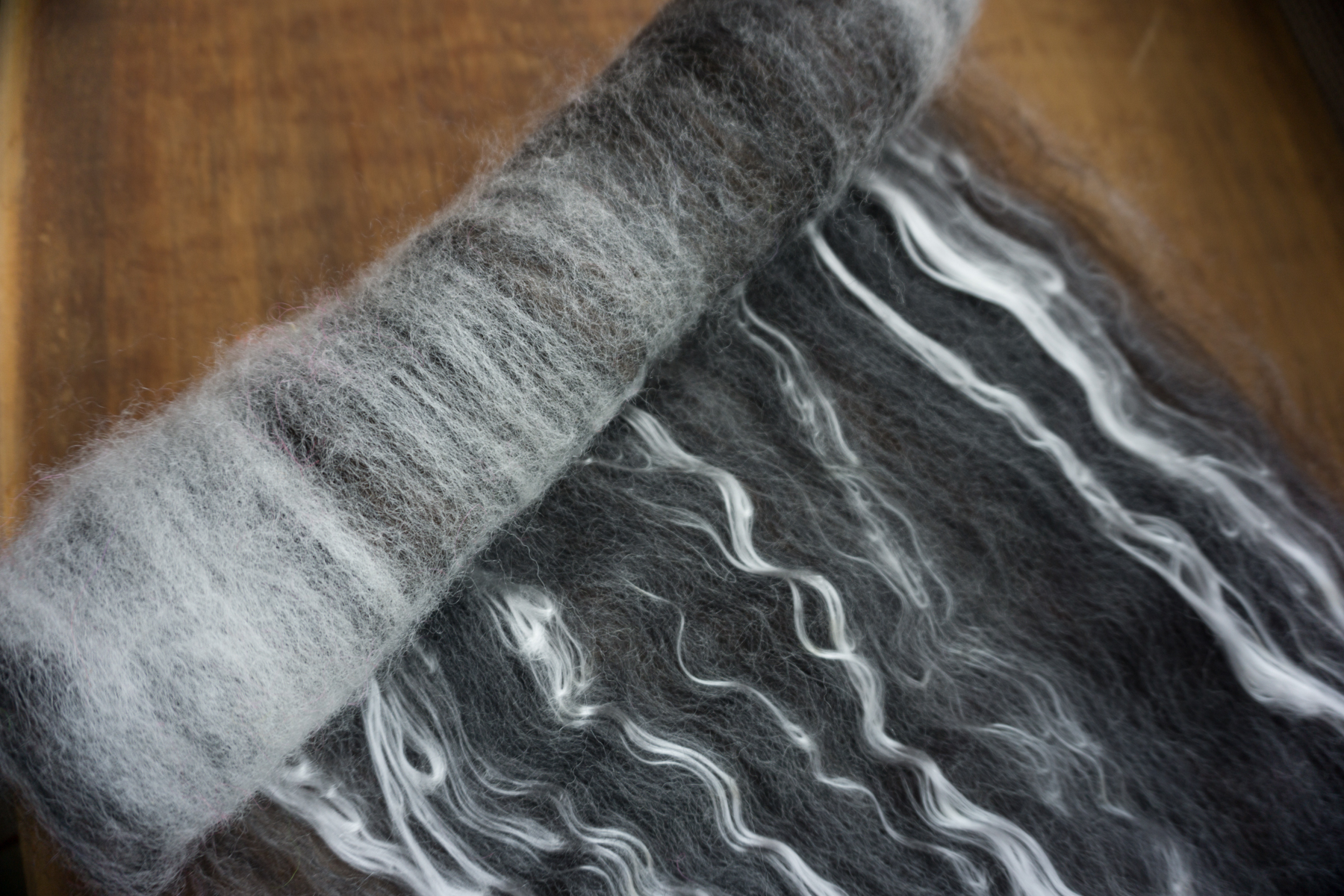
The white streaks are tencel which I ‘painted’ onto the main drum directly because I wanted blocks of bling in the batt. You do this by ‘stroking’ the fiber against the tines as you are cranking it.
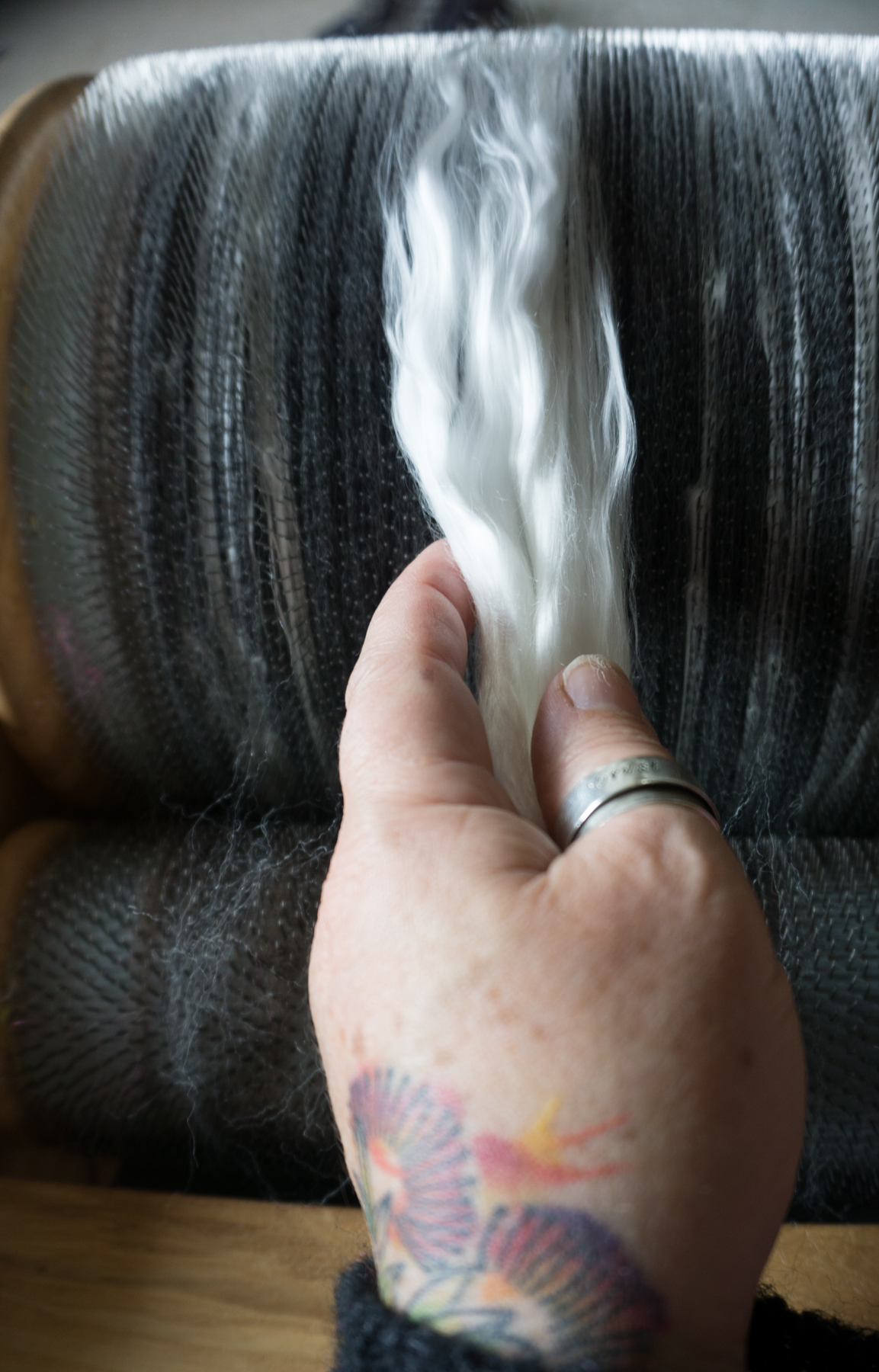
The second pass gave me a more blended colour:
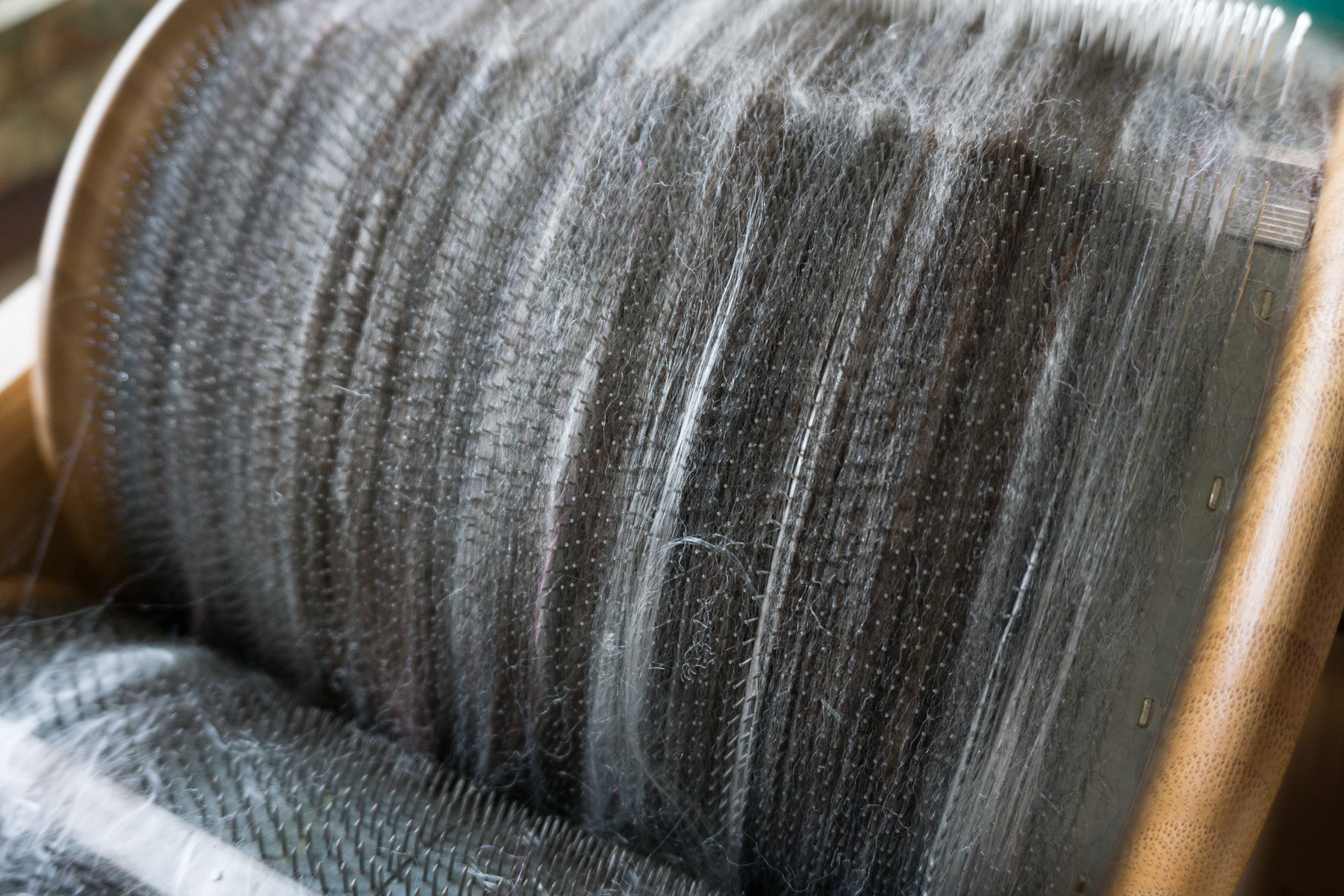
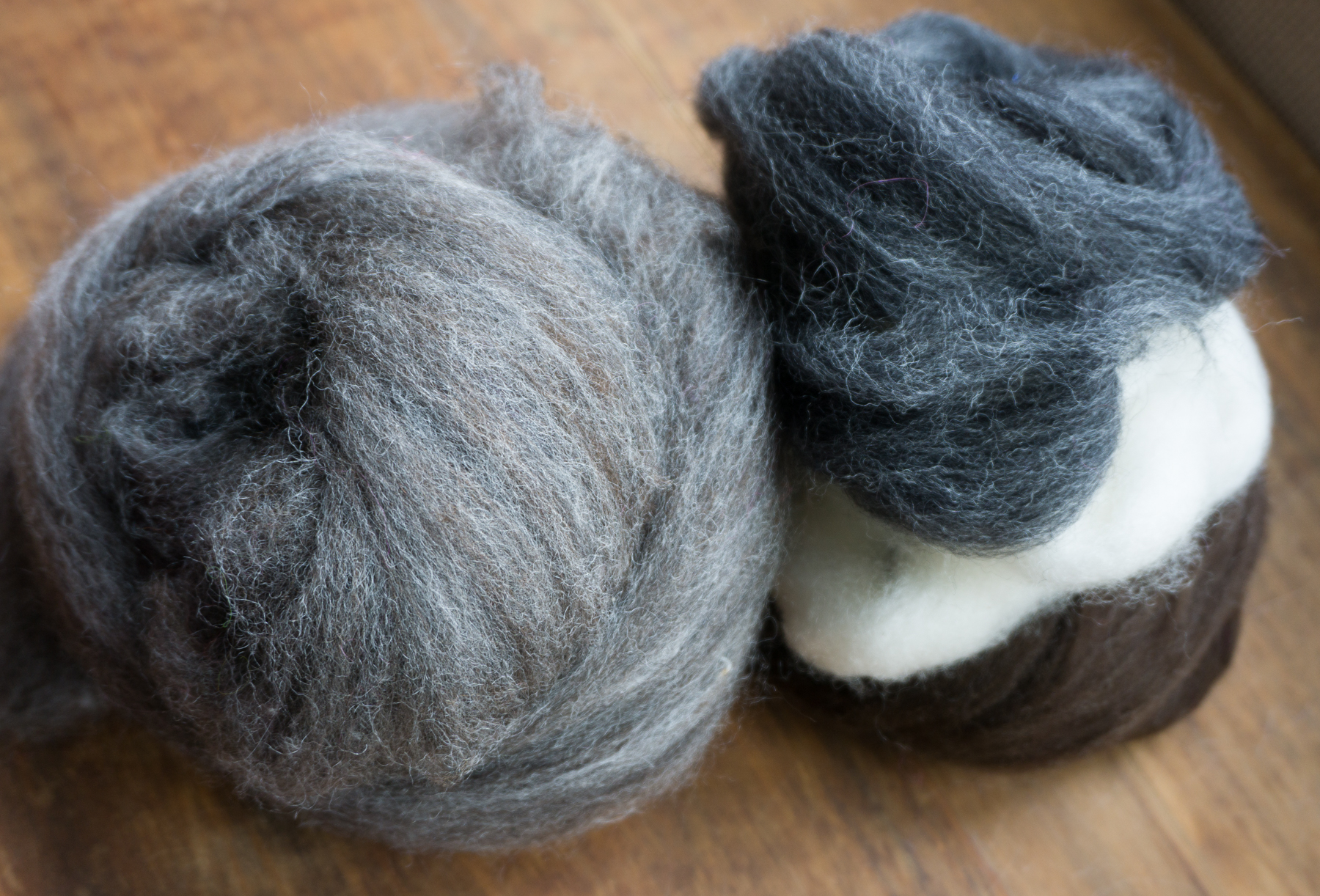
and the third and final pass gave me a very homogenous blend, in which the brown tone really warm up the grey, the white lightens it, while as a whole it looks more like a single colour with some rich depth to it. If you wanted to blend it even further it would not harm the fibres on this 128TPI cloth to continue for another two or even three passes, the only consideration is not to crank it too quickly, especially with the 8-1 ratio of the Fusion Engine, you don’t need to as all the gears do the work for you!
Even if you have the right carding cloth for your fibre, you may still have the occasional carding problem. Here are a few tips that might help.
If you are finding the nepps are still forming in your batt there are several reasons this could happen, even when your cloth and fibre are matched well. Nepps are formed by short pieces of fibre, either from short cuts from the shearing, or from broken fibres caused during carding. To remedy this you can: check that you have shaken out the fibre to remove short cuts, you will also see these as you open up your locks and pick through your fibre supply before you feed it into the carder. Make sure they are all out.
You should also check the strength of your fleece, ‘tippy’ fleeces, ones that have delicate tips (usually due to weathering) should have tips removed, you can either do that by cutting off the tips with scissors, or pulling your staple holding the tip in one hand and the cut end in the other, breakable tips will come off with a bit of a tug.
Another thing that can cause nepps, especially in very fine fleeces, is residue lanolin in the fleece, if there is still some greasiness in the fibre it will also snag it more and cause breaks which lead to nepps, so make sure your fleece is well washed.
If your colours and fibres are not blending as quickly as you would like, or you are finding large patches of colour that you wanted spread through the batt, you can try splitting your batt into smaller pieces for your subsequent passes, try 6 strips instead of three, and spread them the width of the feedtray to create really thin layers.
If you are hearing the tines meshing while you are carding you can make adjustments to the licker in position to find the optimal setting for your carding needs. Do not be scared to move this around, it is useful to change the distance between the licker in and the main drum to get different kinds of batts. In general you want it as close as possible to the main drum without the tines touching. If you want to create more textured batts with a bit less blending, you can move the licker in further away from the main drum to allow more fiber to transfer to the drum at once, reducing the ‘carding’ action – this is great for art batts. You can see how to make this adjustment on our video HERE.
We hope you have gained some useful information about which carding cloth will most suit your fibre and batt making needs! But as always, please feel free to contact us for more information about the carders, the accessories, and delivery times, and contact me (Suzy) directly if you need any help using your carder or in deciding which cloth you need! (suzy@woolwench.com)
Hi Everyone! This week I wanted to share a project with you that I have been having fun with recently! If you have been following our Facebook page you will have seen that I am currently playing with the new 128tpi cloth drum on my […]
The simple art of adding twist to fibers. Spinning. It doesnt seem too hard does it?! And yet for most of us, it is a continual learning curve, once started it seems our discovering is never ‘finished’. For which I am very thankful! It amazes […]
Welcome to the first of my (Suzy’s) Majacraft blogposts! This is my introduction, coming to you from the WoolWench – Suzy Brown studio in Napier New Zealand. Today I would like to share a bit of background about why I am writing this blogpost, as the newest member of the Majacraft team.
Here is me:
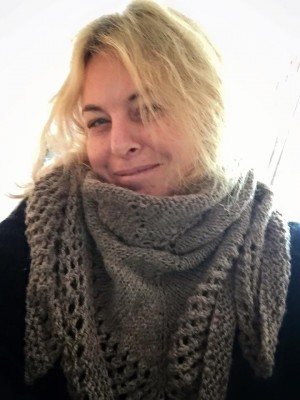
I’m a spinner who loves to spin any kind of yarn, fine and lacey, to big bold and bouncy arty yarns. My website has a gallery of my spinning if you are interested in seeing what I love to do.(www.woolwench.com). Most people who know my spinning also know I have my ‘One Wheel’ which is the fantastic Aura that Majacraft customised for me a few years ago and which is my dream wheel. Since then I have been lucky enough to add a Little Gem to my stable, along with a Majacraft dynamic heddle loom, hand combs, hackle, blending board, drum carder… Shall we just say I am very particular and wont use anything non-Majacraft in my fiber crafts?
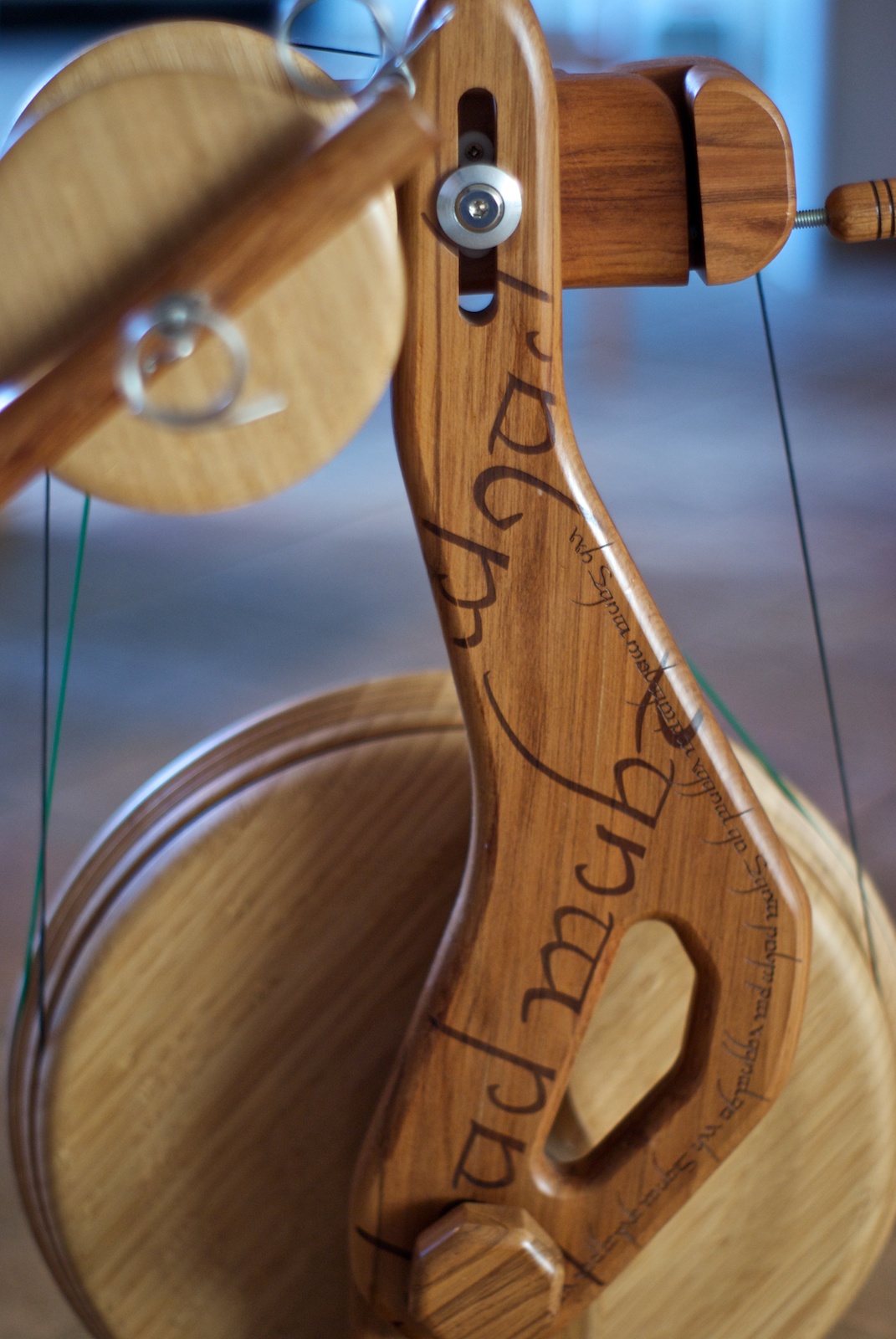
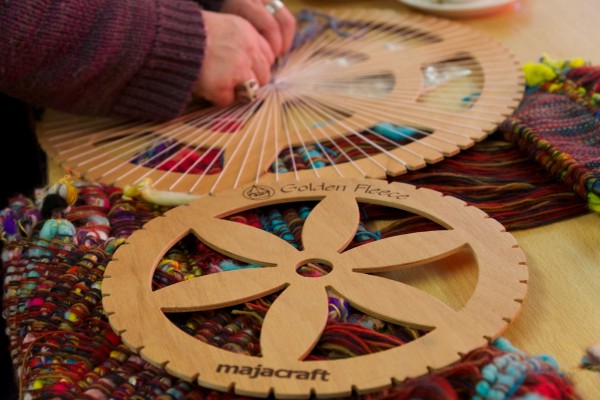
Last year, my business partner Arlene Thayer (Spin Artiste) and I launched our online fiber arts education website Fiberygoodness.com, and as a major component to our flagship course ‘Journey to the Golden Fleece’ I worked with Majacraft to develop the Circular loom, which has become a great success! Together we have grown a wonderful group page on Facebook where people share their circular creations and inspirations, and it has been exciting to see this product grow in use and application.
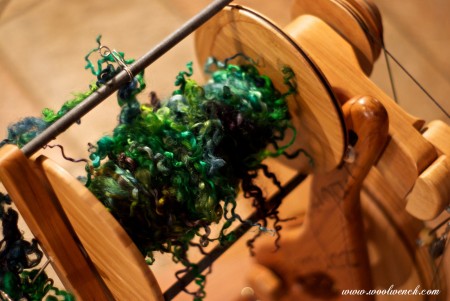
I also worked with (ok nagged) Majacraft on the development of the Overdrive Spinning Head for production and bulky yarn spinning, it was a thrill to share in the making and the launch of this fantastic accessory (here we are on You Tube) which has opened up many new possibilities in my spinning practice.
Now I have returned to my home in New Zealand after 12 years residence in the Netherlands. The opportunity to work more closely and on a more ‘official’ level with Majacraft as their brand new Enablement Manager came at the perfect time, and in tandem with my plans for expanding Fiberygoodness it is the ideal match! I feel blessed to be able to follow my dreams in this way.
In the near future I plan to bring you some fun projects right here on the blog: things to make with your Majacraft wheel or loom, and tool tips and tutorials for the big range of tools we produce. I will also be working to expand the Majacraft You Tube channel with more tool specific demo’s and projects! Let me know what you would most like to see in a Majacraft video and I will do my best to make it! I will be posting regular customer newsletters so if you want to hear early about any fun activities coming up you should sign up RIGHT HERE!
I would like you to feel comfortable to contact me if you have any questions about Majacraft products such as ‘should I get the one pitch or the two pitch hackle?’ or ‘which carding cloth should I start with on my Fusion Engine?’. I would be happy to give you my take on these kinds of questions in the context of what you want to achieve. I hope my experience as a fibre artist and a user of Majacraft equipment can be of service to you in helping you make good choices if you need it.
I look forward to sharing some fun activities with you and getting to know you better!
We have built a drum carder. It is called the Fusion Engine and to be honest, I think it is pretty amazing! It is packed full of features and innovations that make this drum carder incredibly versatile and easy to use. Many of […]
If you are interested in double heddle weaving on the Dynamic Heddle Loom, we offer some really useful little mounts to support the heddle during the warping of the loom. They have little metal discs so the magnets in the heddle will stick to them […]
One of our new developments with the circular looms is in the packaging. They are now packed on a sheet of cardboard and sealed with plastic. I have also written a basic introductory tutorial to get weavers started which is to be included with all the circular looms that go out now. It can now be downloaded for free from the web site if you are interested.
My hope is that it is simple enough to help younger weavers to get started so let me know if you think improvements could be made.
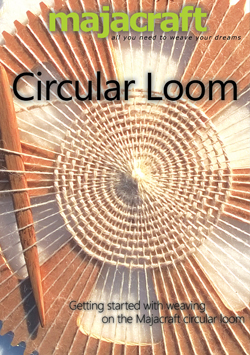
You can download it here Getting Started with the Circular Loom – Concise Version
Until next time
Andy
Over the years we have learned that sometimes people can feel a little intimidated or confused by how to use the tensioning system on the Aura and Overdrive heads. It is really simple to say “oh its easy, just turn that knob”, sometimes the practicality […]